From waste to resource
Five areas of activity, a single objective: to transform what we discard into materials, energy and value for the territory.
Landfill
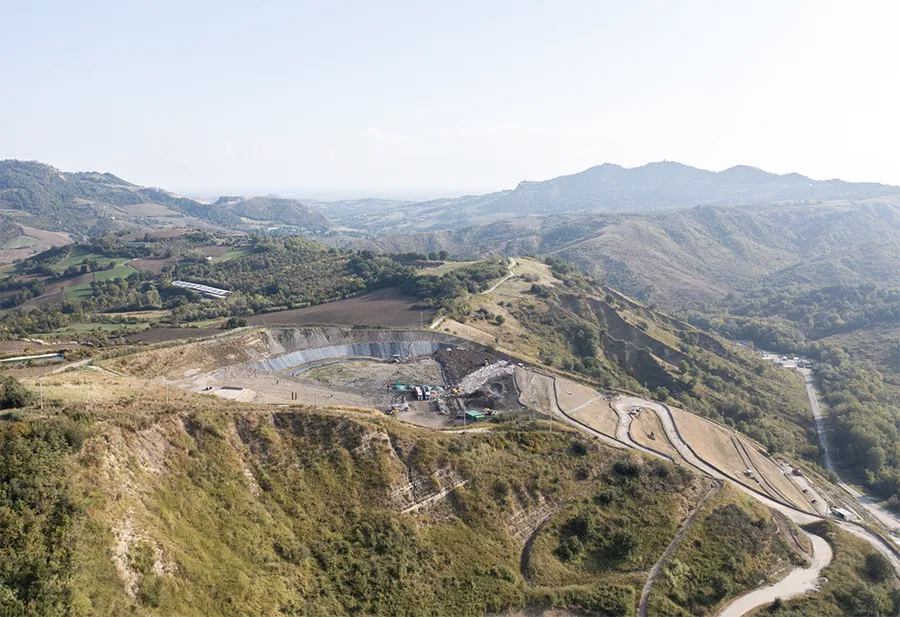
This sector comprises landfills G1 and G2, now in the post-operational phase, G4 currently in operation, and G3 under construction. This is also where non-recoverable waste produced by the Complex’s other facilities is ultimately disposed of. The biogas generated from the biodegradable fraction is captured and utilised to produce electricity and heat.
Sorting
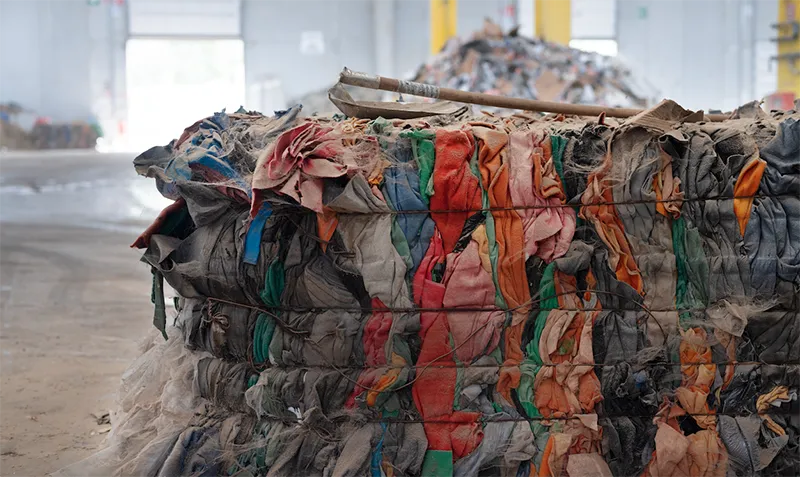
The Sorting and Recovery Plant separates recoverable fractions, such as paper and cardboard, plastic, wood, metals and glass, using mechanical and manual processes. The materials are then sent to the recovery chains and reintroduced into the production cycles, reducing the volume to be disposed of.
Stabilisation
The plant treats the organic fraction of the waste through anaerobic digestion processes, transforming it into biogas and digestate. The biogas is then used to generate energy, contributing to reducing the volume of material sent for disposal and recovering value from the waste.
WEEE
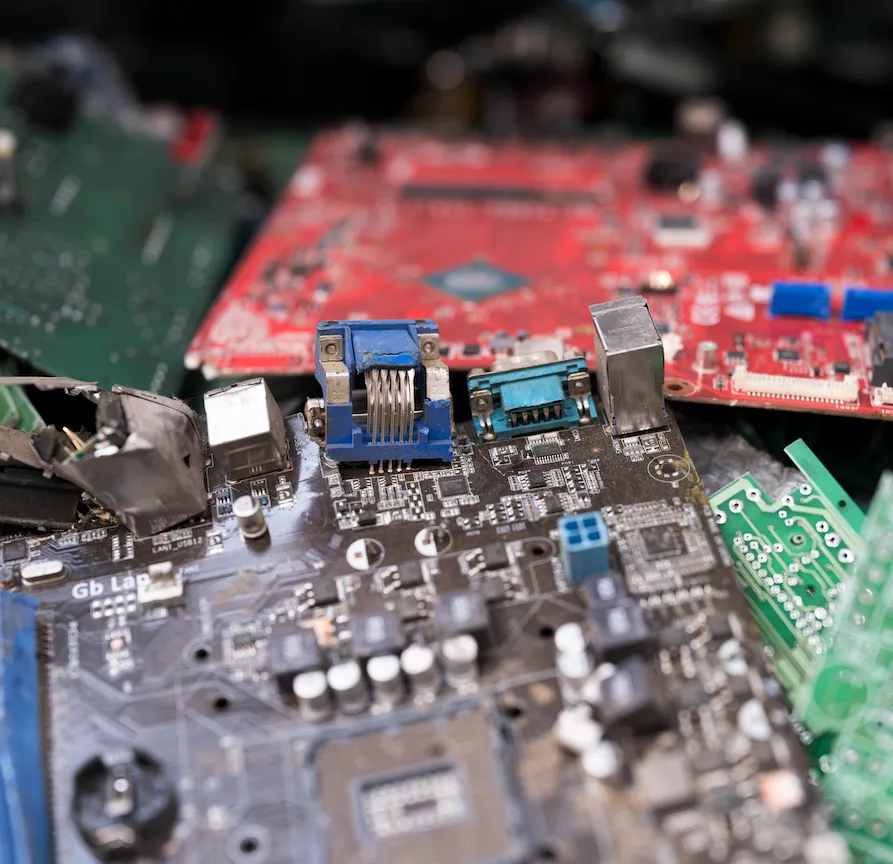
At the Ponte Uso plant, Sogliano Ambiente processes and recovers waste from electrical and electronic equipment. A dedicated line for photovoltaic panels enables the separation and recovery of materials such as glass, aluminium, copper, plastic and silicon. Sogliano Ambiente was the first company in Italy to obtain ‘End of Waste’ certification for recovered glass.
02
Material recovery
Applying the principle that ‘Everything is transformed’, Sogliano Ambiente recovers materials from incoming waste streams ready to be returned to the market as secondary raw materials (SRM) or as End-of-Waste (EoW) products: paper and cardboard, plastic, wood, metals, glass, as well as compost and fertilisers derived from the organic fraction.
The treatment of the wet fraction of waste at the Stabilisation Plant produces mixed composted soil improver, intended to be used in agriculture. The effluent generated by the process, on the other hand, follows a dedicated treatment route, separate from that of landfill effluent.
The various recoverable fractions are separated at the Sorting and Recovery Plant and prepared for their respective recycling streams. In particular, paper and cardboard recovered as ‘End of Waste’ are delivered directly to the paper mill, where they can be used in subsequent production processes. Plastic, wood, metals and glass are in turn sorted and sent to the most appropriate recovery channels.
The treatment of WEEE also enables the recovery of materials such as iron, aluminium, plastic, silicon and glass from end-of-life electrical and electronic equipment. This makes recovery and disposal complementary parts of the same system: maximising the value of what can have a new use and sending only those fractions that cannot be further recovered to landfill.
03
Energy Production
Over the years, Sogliano Ambiente has invested in the construction of plants for generating energy from renewable sources: clean electricity is generated from treated waste, part of which is used for self-consumption and the remainder fed into the grid.
Currently, over half of the electricity consumed by Sogliano Ambiente comes from self-generated renewable sources.
Biogas
The anaerobic digestion of organic waste, both at the landfill site and in the Stabilisation Plant, produces biogas rich in methane, which is used in internal combustion engines connected to electricity generators.
Photovoltaics
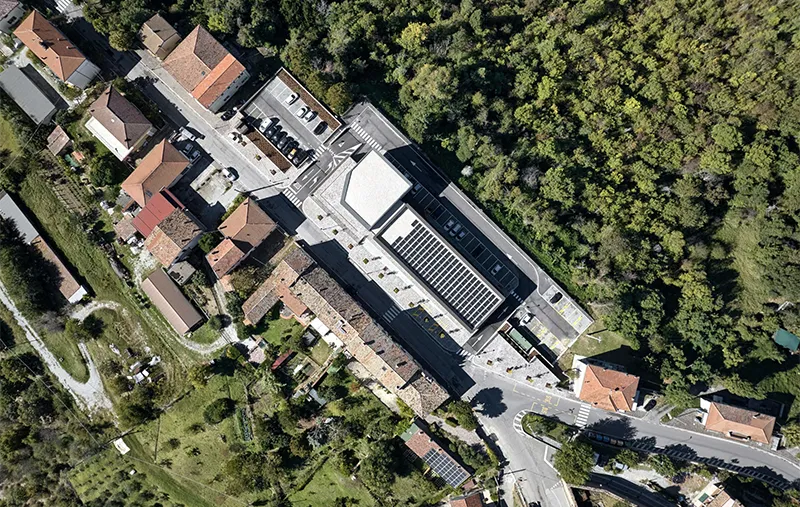
The photovoltaic systems installed on the roofs of the production sites — sorting, stabilisation, WEEE — make a significant contribution to the company’s energy self-sufficiency.
Hydroelectric
Two hydroelectric power stations, one in Pesaro on the River Foglia and one in Gianico, complete the mix of renewable sources, enhancing the use of available natural resources.
04
Plant design and construction
Thanks to its wealth of experience and specialist expertise, Sogliano Ambiente has, over time, developed solid design capabilities, which enable it to operate as a qualified partner in the design, construction and direct management of plants for the treatment, recovery and disposal of urban and special waste.
This advanced technical expertise is also applied to projects aimed at improving efficiency, expanding and innovating its own sites, such as the project to build the G3 landfill site, or the construction of new facilities for wastewater treatment and combined heat and power generation.
A Technical Design and Construction Department oversees the entire process, from design through to construction, and on to operational management and maintenance.
05
Transport and Monitoring
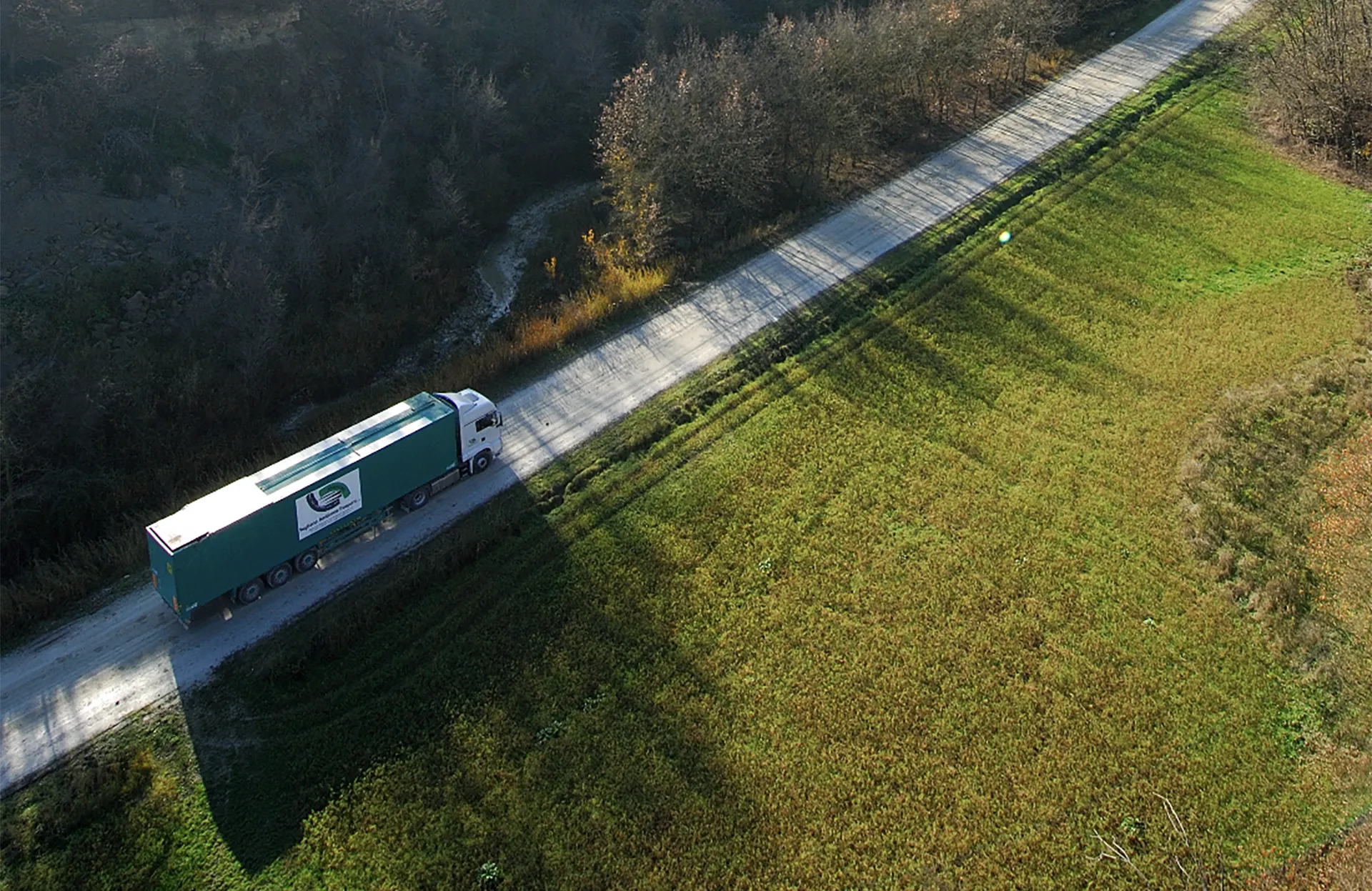
The transport of waste to the Ginestreto Complex is partly handled by Sogliano Ambiente Trasporti, a subsidiary of Sogliano Ambiente. Operations are managed to comply with safety and traceability procedures, with the aim of ensuring efficiency throughout the entire supply chain.
At the same time, Sogliano Ambiente continuously monitors the environmental impacts of its operations: from atmospheric emissions to water quality, and from noise to odour management. A certified environmental management system, supplemented by EMAS registration, ensures periodic audits, comprehensive monitoring of the facilities and constant verification of compliance with current environmental regulations and authorisations.